Espresso Coffee Machine Home Tips That Will Transform Your Life


How to Choose an Espresso Coffee Machine Home
A high-quality espresso machine can take your coffee-making at home to the next level. How do you pick?
There's plenty to consider, from measuring and grinding your own beans, to pressing and tamping correctly and obtaining the proper espresso shot. Fortunately, many of the tasks that need to be done can be automated using semi-automatic equipment and, in some cases, fully automated models.
Manual
You'll need top quality equipment to make the best possible espresso at home. The most essential element of the system is an espresso maker that has well-designed and sturdy design that can handle pressure. Certain manufacturers have stripped the system to a minimum, resulting in machines that don't have boilers and rely instead on hand-pressure for some decent shots.
We've tried a few and have concluded that the Lelit Bambino Plus is one of the top. It's not cheap, but you're getting coffee machinery that will last for decades and comes with 35 years of Lelit service and support to stand behind it. It's not the most lightweight, but that's expected considering its build. It also has a gorgeous retro-futuristic design that's sure to be a conversation-starter.
Breville Smart Grinder EK835 is yet another worthy candidate. It's not expensive however it's a fantastic grinder that will allow you to grind your own coffee beans. It's a bit larger than the other grinders we reviewed but that's because it's got an incredibly large burr set and can handle more than the standard burr set can. It's easier to use than some of the models we reviewed and comes with a dependable warranty.
There are four types of espresso machines: Manual/Lever Semi-Automatic, Volumetric (sometimes called Automatic) and Super-Automatic. Manual levers are more traditional design and are more easy to use, however they require more skill and understanding to dial in and pull shots.
Semi-automatics let you do the grinding and tamping by yourself however they come with an electric pump that gives constant flow and pressure. You can adjust how much espresso you'd like in your coffee by stopping the brewing. Most semi-automatics also have steam wands to make froth. cheap espresso machine -automatics are the best in convenience, featuring built-in grinders and tampers aswell as brew cycles.
Semi-Automatic
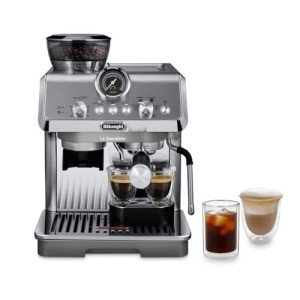
The difference between semi-automatic espresso machines and fully automated machines comes down to the degree of control you wish to have over the making process. Manual espresso machines rely on the barista to create pressure and pull the shot, which can be exhausting and requires lots of practice. Fully automated machines take care of everything for you, brewing professional-quality espresso with the click of an button. However, this convenience comes at a price and the machines can be expensive to buy or rent.
Semi-automatic machines are the ideal choice for those who would like to be in control of their coffee brewing, but don't have the time or expertise to be a professional barista. This type of machine eliminates the guesswork from brewing a shot. It grinds the beans into a hockey-puck shape, compresses them, and then forces hot water through the puck at the right pressure. This kind of espresso maker can also allow you to steam milk, and then make latte art.
These machines are more costly and require more maintenance than fully automatic machines. However for those who don't have the money to purchase or lease a fully automatic espresso machine, semi-automatic espresso makers can be an affordable alternative.
Fully automatic espresso machines are the newest invention in the world of espresso makers and they promise the same cup of coffee every time with little effort. The machines can complete all the steps required to make espresso with a single push of a switch from grinding the coffee beans, to making the shot and steaming the milk. This is a preferred option for cafes that must be able to serve a variety of customers in a short amount of time and want user-friendly. These machines are costly and are not suitable for all cafes. If you're looking to purchase an espresso machine that is fully automated for your business, consider buying or renting two, one to cover the most busy times and the second to manage the slower times.
Pods
With pod coffee machines, you can make espresso drinks at the touch of the button. They make use of disposable capsules filled with coffee ground in advance and milk powder to brew your beverage. The best espresso pods are simple, sleek and give consistent results--shot after shot will be crowned with a smooth layer of crema, which is the signature of a top espresso.
Although pod machines might not offer the same degree of control that bean-to-cup models do, they are still an excellent option for those who prefer to skip grinding and tapping their own beans, and who prefer convenience over quality. Although they don't produce the same flavor as freshly ground beans made from an excellent coffee grinder, the advancements in pod technology and a growing selection of coffee varieties make these models better than ever.
These machines utilize a variety of coffee pods, but they all share the same basic design and shape. The majority of them are small disks that have papers that resemble tea bags. They can be inserted in a portafilter to brew. Some are specifically designed to work with drip coffee makers, while others are designed specifically for espresso machines. Soft pods are one of them and Easy Serving Espresso (E.S.E.) pods are the latter.
It is essential to look through a manufacturer's list of compatible pods before purchasing a pod-based machine. Many of these machines have a variety of pods, which means you can test out different flavors and brands before buying your favorite. Some brands also offer refillable pods for people who want to reuse their old pods.
It is crucial to think about the cleaning and maintenance needs of your coffee machine regardless of the model. While most bean-to-cup machines require manual cleaning, rinsing the grinder and brewing mechanisms and regularly descaling them, several pod-based espresso machines come with built-in self-cleaning features that make it easier to clean.
Water
The espresso machine is an extremely powerful tool, which uses high pressure to push coffee that has been finely ground into a tightly packed container. The espresso shot is concentrated and is the perfect ingredient for cappuccinos. This was discovered by the Europeans in the latter part of the 1800s, and specifically the Italians. They utilized this to create a brand new range of café drinks.
There are a variety of ways to make espresso, but the principle is the same: heat the water to a temperature that is just below boiling, then push it through the densely packed grounds of a portafilter. The water then flows into the container below the grouphead. This process produces a thick, highly flavored espresso cup in less than 2 minutes.
All espresso machines function like this, however the specifics of each one differ slightly. Some machines employ a piston design that requires you to press down on an lever to create the required pressure (8 to 10 bar; 116 to 145 psi). Other machines use an electric pump to generate the necessary pressure. Some, including the inexpensive at-home machines rely on heated water and high temperatures to create the similar effect.
Whatever way your espresso machine works the quality of the ingredients you use is essential to making a good cup of espresso. Begin with a premium dark-roasted espresso bean. Then experiment with different grinds and tamping techniques to discover the perfect recipe for your espresso machine at home.
Make sure you use the correct water for your espresso machine. It is recommended to use tap water with a moderate mineral content. The minerals in the water can help to make a smooth, balanced cup of coffee as well as stopping the buildup of scale. La Marzocco has downloadable guidelines for coffee water that will aid you in determining the mineral content of the water you drink locally.
As you become more familiar with using your espresso machine at home, it's recommended to invest in some other accessories, such as a portafilter and a steel tamper. These accessories will help improve your brewing techniques and give you a sense satisfaction with the coffee you can now make at home.